


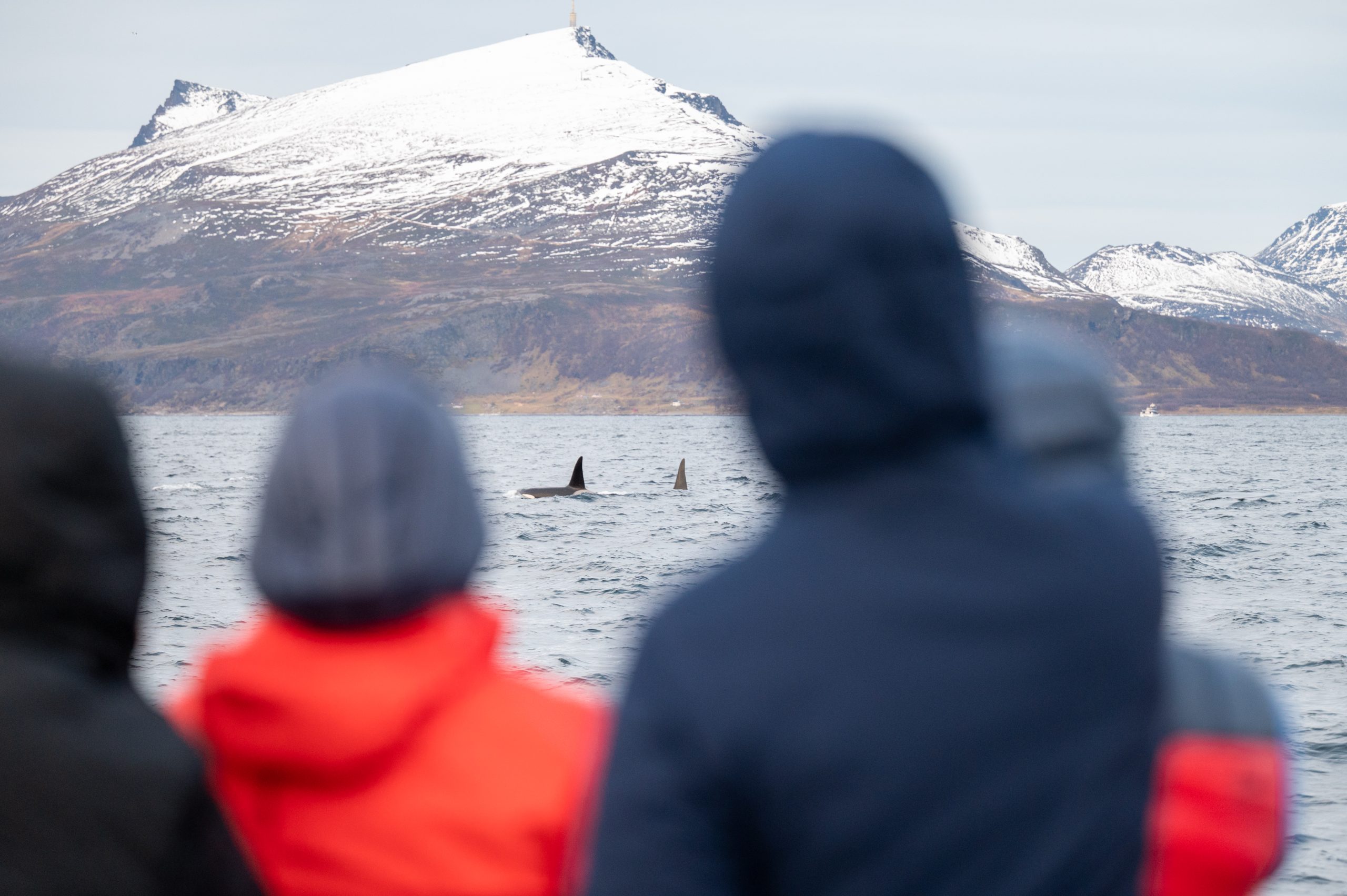
Stay warm, stay happy
A winter whale safari in Tromsø (Tromso) is one of the most exciting and unforgettable experiences you can have in Northern Norway. Surrounded by snow-covered mountains, taking in the crisp air of the north, and navigating through fjords, you’ll witness orcas, humpbacks, and fin whales in their natural environment. But to fully enjoy this once-in-a-lifetime adventure, one thing is absolutely essential — staying warm.
The arctic isn’t always extreme — but it can feel that way at sea
Even if the temperature on land feels manageable, being out on a boat can be much colder. The combination of wind chill, sea spray, and long hours outdoors can quickly make it feel like -20°C or colder. On our whale safaris, we spend several hours out at sea to give you the best possible chance of seeing whales. Our boat MS Sylvkallen has two warm indoor lounges, and you can always help yourself up to a cup of hot coffee, tea or hot chocolate if you get a bit chilly. But for witnessing the best moments of whale watching, you’ll want to be outside on deck as much as possible — and that’s only comfortable if you’re dressed properly for the conditions. As we say in Norway: there is no bad weather, only bad clothing!
Remember: it’s always better to bring one layer too many than one too few. Once you’re warm, you can focus on what’s important – whales and taking in the full arctic experience more comfortably.
The secret to staying warm: Layering
The key to arctic comfort is layering — wearing multiple thin layers that trap warmth and can be adjusted as needed. This system keeps you warm and dry throughout the trip.
1. Baselayer (next to skin)
Your first layer should keep moisture away from your body. The best thermal wear is made from wool, and its main job is to keep the heat you produce in and close to your body.
- Choose merino wool tops and long underwear — they’re soft, breathable, and warm even when damp
- Avoid cotton; once wet, it loses its insulation and makes you cold fast
- Warm, moisture-wicking socks (wool is best, avoid cotton)
Pro tip: Always bring a spare pair of socks — just in case.
2. Mid layer (insulation)
This is your main source of warmth. A mid layer should be thicker than your base layer, but not so thick that it can’t be worn under a sweater.
- Wool sweater or fleece jacket
- Fleece or insulated pants
- Two lighter mid-layers are better than one thick one, so you can easily adjust.
3. Outer layer (protection from wind and water)
This is what keeps you dry and protected from the Arctic elements.
- Waterproof and windproof jacket (ideally insulated)
- Waterproof pants
4. Accessories (the small things that matter most)
Your hands, feet, and head lose heat fastest — protect them well.
- Warm, windproof hat/beanie (covering your ears)
- Scarf or neck gaiter (buff)
- Insulated, waterproof gloves or mittens
- Thin inner gloves (for handling your camera)
- Warm winter boots with good grip and insulation
- Hand and toe warmers (optional, but wonderful on very cold days)
What to pack for the day
A few small extras can make your day more comfortable:
- Extra socks and gloves
- Lip balm and face moisturizer (the air can be very dry)
- Camera and spare batteries (cold drains them fast)
- Extra snacks